Holy Week in Puglia: traditions, waiting, and the taste of home
In Puglia, Holy Week is not just a religious time. It is a pause — a slower, more meaningful moment filled with silence, rituals, and traditions passed down through generations. The streets glow with soft lights, churches remain open late into the night, and people move quietly, almost as if respecting something deeply sacred.
In Molfetta, all of this is closely connected to food — simple, humble, yet full of meaning.
Holy Thursday and the “Sepolcri”
Holy Thursday is one of the most emotional and deeply rooted moments of the week, closely tied to religious tradition.
Churches prepare the sepolcri (Altars of Repose) to commemorate the death of Christ and the moment when Jesus lay in the tomb. This is where the faithful go to pray and pay devotion to the Eucharist, in a quiet and reflective atmosphere.
In Molfetta, this tradition is particularly strong. Each church creates its own sepolcro, often in a scenographic way, using symbols of the Passion such as sprouted wheat grown in the dark, grapes, bread, and wine.
There is also a specific custom: the sepolcri must be visited in odd numbers — usually three or five churches. In Christian symbolism, odd numbers represent something unfinished, something still in progress, reflecting the moment of suspension before the Resurrection.
For years, I followed this tradition without ever questioning it — until one day I decided to look into it.
On Holy Thursday evening, people walk through the streets, moving from one church to another, often in silence, reciting prayers such as the Our Father, the Hail Mary, and the Gloria.
It is not just a physical journey, but a symbolic one — representing Christ’s path towards the tomb.
And then comes the waiting.
The night, the wait, and the Five Mysteries
After visiting the sepolcri, the night continues.
In Molfetta, Holy Week is deeply connected to the Procession of the Five Mysteries, organised by the Confraternity of Santo Stefano, which begins in the early hours of Good Friday, around 3am.
The city, still wrapped in darkness, fills with people waiting in silence. There is a sense of anticipation, almost suspended in time.
The statues representing the suffering of Christ — the Five Mysteries — are carried slowly through the streets, in an atmosphere that is both powerful and deeply emotional.
This is also one of the traditions I feel most connected to.
For years, it was my fixed appointment with my mum. We would go together, always with one of her closest friends — someone who is no longer with us today.
It is a memory I carry with me, something deeply personal.
I have never been particularly religious, even though my family is. But for me, this was never just about faith — it was about belonging, about ritual, about something truly folkloric and unique to my hometown.
And that is what makes it so special.
The pizzarello: the sandwich of the night
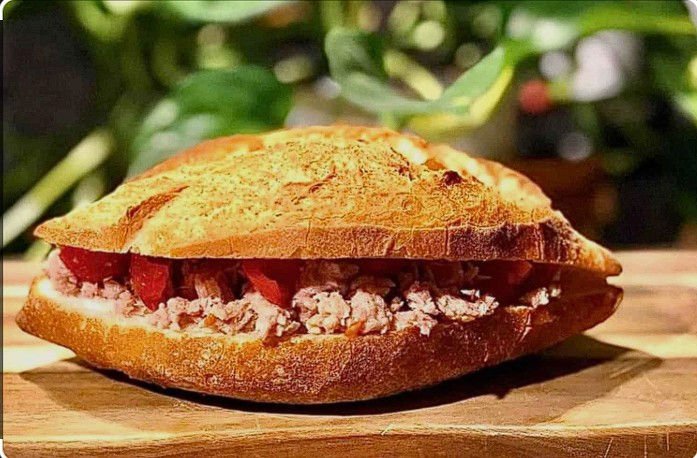
While waiting for the procession to begin, there is a small but iconic tradition: the pizzarello.
A simple semolina bread roll filled with tuna, extra virgin olive oil, and capers.
Nothing elaborate — yet exactly what is needed.
It is eaten outdoors, often standing, in the middle of the night, surrounded by quiet conversations and the shared experience of waiting.
It is not just food — it is part of the ritual.
Easter lunch: tradition vs. change
On Easter Sunday, everything shifts. Homes fill with people, tables become abundant, and the traditional star of the meal is often lamb.
Roasted, baked, served with potatoes — every family has its own version.
However, even in Puglia today, there are ongoing discussions. Some people remain deeply connected to tradition, while others are choosing different paths.
And maybe that is what keeps traditions alive — their ability to evolve.
Scarcella: Molfetta’s Easter sweet
If colomba is the national Easter cake, in Molfetta the true symbol of Easter is the scarcella.
This traditional dessert is made of shortcrust pastry and often shaped into symbolic forms. Inside, it can be filled with almond paste, jam, or Nutella — especially for children.
It is decorated with icing sugar, glaze, or small chocolate eggs.
More than just a dessert, the scarcella is something that is prepared at home and shared — a gesture of care and tradition.
Tradition is memory
These recipes are not just about food.
They are about waiting.About silence. About shared moments that repeat year after year.
They are nights in the streets, the scent of olive oil, and hands covered in sugar.
And even when we are far from home, we carry all of this with us.
A small confession… and a second chance
I actually tried to introduce the pizzarello last year.
No one ordered it.
To be fair, the business had just opened, and unless you’re from Puglia, it’s not exactly the kind of sandwich you recognise on a menu.
But traditions deserve a second chance.
So this year, I’m bringing it back — not expecting it to be the bestseller, but simply because it tells a story I care about.
And to make things a little easier (and more delicious), every customer ordering from the menu will receive a small taste of Easter:
a piece of scarcella
a freshly made zeppola
No expectations — just a little invitation to try something new.
Because sometimes, the best way to understand a tradition… is to taste it.
Settimana Santa in Puglia: tradizioni, attese e sapori di casa
In Puglia, la Settimana Santa non è solo un momento religioso. È una pausa, un tempo sospeso fatto di silenzi, rituali e tradizioni tramandate di generazione in generazione. Le strade si riempiono di luci soffuse, le chiese restano aperte fino a tarda notte e le persone si muovono lentamente, quasi in rispetto di qualcosa di più grande.
A Molfetta, tutto questo si intreccia con il cibo — semplice, essenziale, ma ricco di significato.
Il Giovedì Santo e i “sepolcri”
Il Giovedì Santo è uno dei momenti più sentiti e profondamente legati alla tradizione religiosa.
Le chiese allestiscono i cosiddetti sepolcri (altari della reposizione) per rievocare la morte di Cristo e il momento in cui Gesù giaceva nel sepolcro. È qui che i fedeli si recano per rendere devozione all’Eucaristia.
A Molfetta, questa tradizione è particolarmente viva. Ogni chiesa prepara il proprio sepolcro in modo diverso, spesso in maniera scenografica, utilizzando simboli della Passione come il grano germogliato al buio, l’uva, il pane e il vino.
C’è anche una regola precisa: i sepolcri devono essere visitati in numero dispari — solitamente tre o cinque. Nella simbologia cristiana, i numeri dispari rappresentano qualcosa di incompiuto, sospeso, proprio come il tempo della Passione in attesa della Resurrezione.
Per anni ho seguito questa tradizione senza chiedermi il perché… finché un giorno sono andata a cercarlo.
Durante la sera del Giovedì Santo, le persone attraversano le strade della città, entrando e uscendo dalle chiese in silenzio, recitando preghiere.
È un percorso che non è solo fisico, ma simbolico: rappresenta il cammino di Cristo verso la sepoltura.
E poi arriva l’attesa.
La notte, l’attesa e i Cinque Misteri
Dopo la visita ai sepolcri, la notte continua.
A Molfetta, la tradizione è profondamente legata alla storica processione dei Cinque Misteri, organizzata dalla Confraternita di Santo Stefano, che parte nelle prime ore del Venerdì Santo, intorno alle 3 del mattino.
La città, ancora immersa nel buio, si riempie di persone in attesa. C’è un silenzio particolare, quasi sospeso.
Le statue che rappresentano la Passione di Cristo — i Cinque Misteri dolorosi — vengono portate in processione lungo le strade, in un’atmosfera lenta, intensa e profondamente emozionante.
È anche una delle tradizioni del mio paese a cui sono più legata.
Per anni è stato un appuntamento fisso con mia mamma. Andavamo sempre insieme, io, lei e una sua carissima amica — che purtroppo oggi non c’è più.
È un ricordo che porto con me, qualcosa di profondamente personale.
Non sono mai stata particolarmente religiosa, anche se la mia famiglia lo è. Ma per me non è mai stato solo un momento di fede — era appartenenza, era rituale, era qualcosa di profondamente folcloristico e unico del mio paese.
Ed è proprio questo che lo rende così speciale.
Il pizzarello: il panino della notte
Durante l’attesa della processione, c’è una tradizione semplice ma iconica: il pizzarello.
Un panino di semola condito con tonno, olio extravergine d’oliva e capperi.
Nulla di elaborato — ma perfetto per quel momento.
Si mangia per strada, spesso in piedi, nel cuore della notte, tra silenzi e chiacchiere leggere.
Non è solo cibo — è parte del rito.
Il pranzo di Pasqua: tra tradizione e cambiamento
La domenica di Pasqua tutto cambia. Le case si riempiono, le tavole diventano abbondanti e il protagonista tradizionale è spesso l’agnello.
Arrosto, al forno, con le patate — ogni famiglia ha la sua versione.
Tuttavia, anche oggi ci sono discussioni: tradizione o cambiamento?
E forse è proprio questo che mantiene vive le tradizioni — la loro capacità di evolversi.
La scarcella: il dolce della Pasqua molfettese
Se la colomba è il dolce nazionale, a Molfetta il vero simbolo della Pasqua è la scarcella.
Un dolce di pasta frolla, spesso con forme simboliche, ripieno di pasta di mandorle, marmellata o Nutella.
Decorata con zucchero a velo, glassa o ovetti di cioccolato, è un dolce che si prepara e si condivide.
La tradizione è memoria
Queste ricette non sono solo cibo.
Sono attesa.Silenzio.Momenti condivisi che si ripetono ogni anno.
Sono le notti in strada, il profumo dell’olio d’oliva e le mani sporche di zucchero.
E anche quando siamo lontani, portiamo tutto questo con noi.
Una piccola confessione… e una seconda possibilità
In realtà avevo già provato a proporre il pizzarello l’anno scorso.
Non lo ha ordinato nessuno.
A onor del vero, avevo aperto da pochissimo e, se non sei pugliese, non è un panino che riconosci subito.
Ma le tradizioni meritano una seconda possibilità.
Per questo quest’anno lo ripropongo — non perché mi aspetto che diventi il più venduto, ma perché racconta una storia a cui tengo.
E per rendere tutto più semplice (e più buono), ogni cliente che ordinerà dal menu riceverà:
un pezzo di scarcella
una zeppola appena fatta
Senza aspettative — solo un invito.
Perché a volte, il modo migliore per capire una tradizione… è assaggiarla.


Comments